In this compilation, we delve into the top 10 most historically important medieval events, unraveling their profound impact and unveiling the rich tapestry of our collective past.
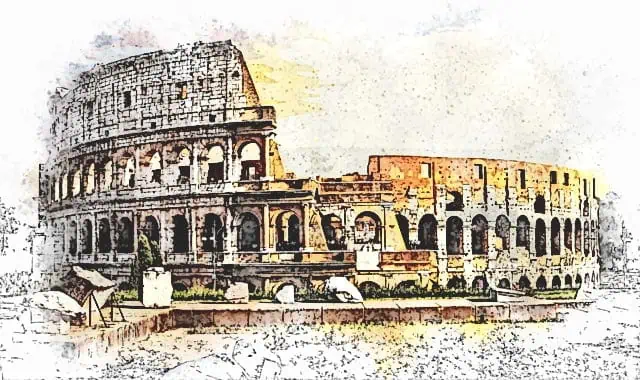
The fall of the Western Roman Empire marked the end of ancient Rome and the beginning of the medieval period in Europe.
Charles Martel’s victory over the Umayyad Caliphate in the Battle of Tours halted the Muslim expansion into Western Europe and had long-lasting implications for the continent’s history.
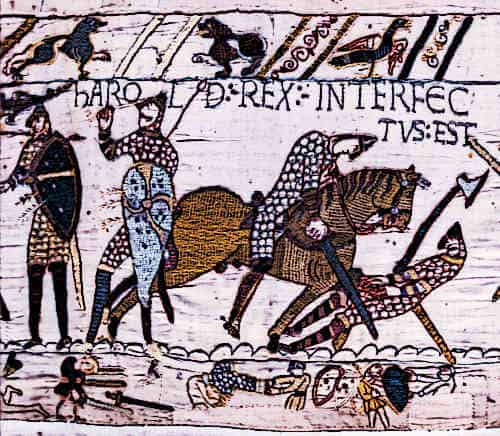
The Battle of Hastings, resulting in the victory of William the Conqueror, led to the Norman Conquest of England, forever altering the country’s political and cultural landscape.
“The Battle of Hastings in 1066 was a seismic event that forever altered the course of English history. It marked the beginning of Norman influence in England and set the stage for profound political, cultural, and social transformations.”
Renowned historian Marc Bloch reflectS on the significance of the Battle of Hastings
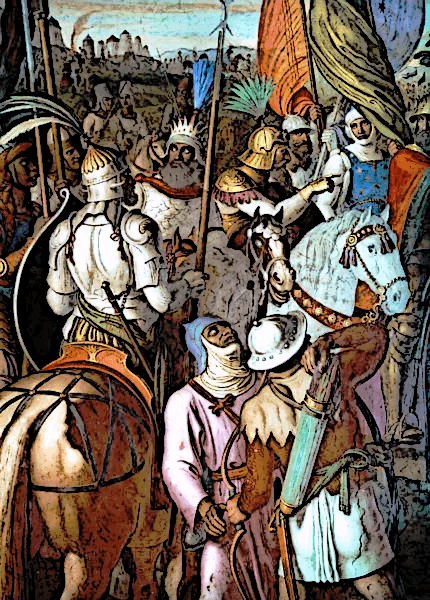
The series of military campaigns launched by Western European Christians to reclaim the Holy Land from Muslim rule had significant religious, political, and cultural consequences.
The Magna Carta, a charter of liberties, was signed by King John of England, establishing the principles of limited royal power and individual rights.
The devastating bubonic plague pandemic had a profound impact on Europe, resulting in widespread death, social upheaval, and economic changes.
“The Black Death, with its devastating toll on human life, irreversibly reshaped medieval Europe. It upended societal structures, challenged religious institutions, and ultimately paved the way for the profound changes that led to the Renaissance and the emergence of the modern world.”
Historian Barbara Tuchman offers an insight into the impact of the Black Death:
The protracted conflict between the Kingdom of England and the Kingdom of France shaped the geopolitical landscape of medieval Europe and had a significant impact on military tactics and diplomacy.
Johannes Gutenberg’s invention of the printing press revolutionized the dissemination of knowledge and contributed to the spread of literacy and the Renaissance.
The capture of Constantinople by the Ottoman Empire marked the end of the Byzantine Empire and the final blow to the Eastern Roman Empire, with far-reaching consequences for the Mediterranean region.
Martin Luther’s Ninety-Five Theses and the subsequent religious movement challenging the authority of the Catholic Church sparked widespread religious and social upheaval, leading to the establishment of Protestantism as a separate branch of Christianity.
These historically important medieval events shaped the course of European history, influencing politics, religion, culture, and society. They continue to be studied and have left a lasting legacy on the world we live in today.